





Ever since the rules-based global order was mapped in the aftermath of WWII, the thought of a fundamental reversal had appeared highly unlikely or even impossible to most of the world. In the eight decades since, the globe has relied on the harmony of idealism, but not forgetting the realism that prevailed beforehand.
Over the past few years however, that idealism has shifted to a system of multipolar rivalry, coercion, and extraction, where superpowers, particularly the United States, appear to be able to do whatever they desire.
The second coming to office of President Donald Trump has only accelerated this decline. His administration’s controversial and often illegal decisions have not only disrupted global supply systems, but also upended traditional international relations and diplomatic order.
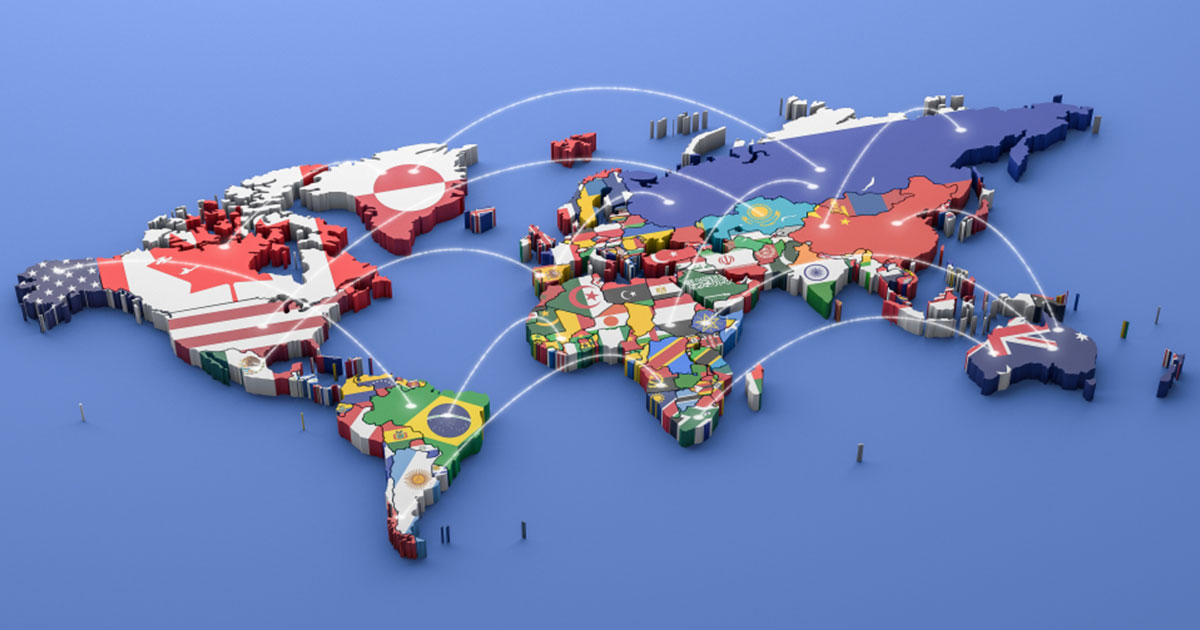
Perhaps the most notable outcome of the White House’s recent policies is the growing need for middle powers and developing countries to forge alliances to rewrite the global order in the face of dwindling trust in superpowers and international institutions like the UN.
The line between the Global South and developed nations also seems to be undergoing a redrawing, as even the USA’s traditional allies seek a departure from established power structures and partnerships.
Middle powers in particular appear to be leading the charge to craft a new global order favoring multilateral foreign policy and the formation of coalitions rather than unilateral decision making in foreign policy.
The style of diplomacy used by middle powers has been labeled “niche diplomacy,” mainly because middle powers have to follow limited foreign-policy objectives as a result of their power capabilities, which are lower than those of great powers or superpowers.
However, middle powers do not challenge the status quo in the international system; they are not revisionist or transformative states. But following Trump’s growing assertions, which have all but devastated the traditional rules-based global order, the middle powers are now seeking to restore multilateralism under new global terms.
Among them are Canada, India, Brazil, Argentina, Mexico, Saudi Arabia, Italy and most G20 members. Depending on the definition, the group can also extend to include a host of other nations, such as Turkiye, Malaysia, and South Africa.
An example of the widening rift was Washington’s decision last year to refuse participation in the G20 summit in South Africa. The move led South African Foreign Minister Ronald Lamola to declare that “the G20 should send a clear message that the world can move on with or without the US.” French President Emmanuel Macron also insisted the American absence “should not block us.”
Canada stands out as the middle power that has done the most to chart new paths in this tumultuous time for global politics. During the World Economic Forum in Davos last January, Canadian PM Mark Carney delivered a sobering speech that outlined just how far the repercussions of the fallout can go.
“Tonight, I’ll talk about a rupture in the world order, the end of a pleasant fiction, and the beginning of a harsh reality where geopolitics—where the large, main power—is submitted to no limits, no constraints. On the other hand, I would like to tell you that the other countries, particularly intermediate powers like Canada, are not powerless. They have the capacity to build a new order that encompasses our values, like respect for human rights, sustainable development, solidarity, sovereignty, and territorial integrity of the various states. The power of the less powerful starts with honesty,” said Carney.
The Canadian leader has since made an official visit to China, forging new alliances and reaching new deals on investments, trade and overall cooperation.
This is significant because the US has traditionally been the destination for over two-thirds of Canadian exports, but that has changed in the wake of Trump’s destructive tariff policies and inflammatory rhetoric. The US President has previously referred to Canada as “the 51st state,” encroaching on its sovereignty and undoing much of the friendly relations the two countries have enjoyed for so long.
As a result, like many other middle powers and emerging powers affected by Washington’s erratic policies, Canada is seeking to strengthen old ties and forge new ones, including in Africa.
This week, the Canadian embassy in Addis Ababa and Addis Ababa University organized a forum for discussions on the unfolding global dynamics. The event, which took solace in the University’s Ras Mekonen Hall, focused on evaluating Ethio-Canada relations since they began 60 years ago, Ethiopia’s evolving international role, and the contributions of middle powers to global governance in a multipolar world. Diplomats, scholars, and students took part.
Talks began with a review of Canada’s role in Ethiopia over the past six decades, which has seen significant contributions in education and manpower development, development finance, climate, peace keeping missions, technology provisions and investment, among others. Canada, a large financier behind the African Development Bank (AfDB), the World Bank, and other international finance institutions, has backed several projects in Ethiopia.
The first Addis Ababa University college president was also a Canadian. Currently, over 50,000 Ethiopian diaspora reside in Canada.
The talks made it clear that Canada is looking to scale up its engagements with Ethiopia, and also use Ethiopia as a gateway to Africa and the AU, with an interest in the potential of trade deals like the African Continental Free Trade Agreement (AfCFTA).
During the event, Canadian Ambassador Nicolas Simard fielded several questions related to how his country intends to handle Ethiopian interests surrounding maritime access, the Grand Ethiopian Renaissance Dam (GERD), and other national priorities. Questions were also raised about Trump’s repeated offers to mediate between Egypt and Ethiopia in the dispute over GERD.
“Regarding GERD, we believe GERD showcases Ethiopia’s commitment to green energy. We also anticipate that when Ethiopia organizes the COP32 by next year, the GERD issue will get more attention. We want to be a partner with Ethiopia on the renewable energy agenda. Transboundary waters are a sticky issue and very sensitive. Regarding GERD, it is possible to have a multi-country commission to reach consensus between Ethiopia, Sudan and Egypt. We believe peaceful agreement can be reached on GERD with those countries,” said the Ambassador.
“On sea access, we encourage Ethiopian authorities to find a peaceful solution on sea access benefits for all. A lot of countries around the world support Ethiopia’s cause and quest for sea access. But it must be through conversation, to avoid tensions in the region.”
Simard also provided his insights into pressing global issues.
“We are going through rough times. There is war and crisis in Ukraine, Iran, Sudan and other places. Civilians are suffering. International institutions like the UN should reform. The kind of coalition middle powers like Canada are looking for now, is not about creating new global institutions, but reforming existing multilateral institutions like the UN. Middle powers like Canada can play roles in such institutions. We need Africa; we need the young talent, we need Ethiopia. We want to capitalize our relations with Ethiopia. We are now moving from an aid approach to partnership, aligning our policy with the Ethiopian government’s agenda. As the international order breaks down, we want to build a coalition with Ethiopia and Africa. Ethiopian students now in campuses, they will uphold this new partnership and find a solution for the raptures in the rules based global order,” stated Simard.
“The US has been Canada’s largest export market. But following the recent tariff raises by the US, Canada decided to explore other opportunities around the world, including in Ethiopia. Canada decided to redouble its trade, investment and overall economic cooperation and other collaborations in each sector. We will bring our big investors. However, peace and stability must be ensured in Ethiopia, to bring our investors. For instance, mining takes billions, but if our mining investors cannot move from place to place inside Ethiopia, that would be difficult,” he added.
Dawit Afework, a senior official at the Ministry of Foreign Affairs, also stressed Ethiopia is working hard to navigate the hard realities of today’s international system by working with all parties including aligning its interests with middle powers like Canada.
“Ethiopia and Canada are currently negotiating on trade and investment protection agreements, as Ethiopia opens up its economy. We are expecting Canadian investors in mining, agro processing and other sectors soon,” said Dawit.
He was asked how Ethiopia intends to balance its foreign policy with countries in the western and eastern camps.
“We are working with all partners. Our priority is Ethiopia’s national interest. So we align with the different agreements we signed with different countries. We are doing a balanced, win-win foreign policy. Canada has been a longstanding, reliable partner. Ethiopia is working to improve in several areas including development, peace and stability. Such a coalition is also important to push for a rearranged coalition within the UN framework,” said the foreign affairs official.
Asnake Kefale (PhD) is a leading political science researcher and lecturer at Addis Ababa University. He relates today’s coercion-based international system and the rivalry between superpowers with the “realism” that reigned before the Second World War.
“Ethiopia’s foreign policy during the Imperial, Derg, and other regimes has always been about balancing between the west and east. Ethiopia’s decision to join BRICS is also good, even though BRICS is not as strong as anticipated. Now, the rules-based international system is in grave danger. So Ethiopia joining BRICS is very good,” said Asnake.
He noted that current conditions are enabling middle powers to gain more influence in geopolitics.
“Ethiopia has been a recipient of aid from Canada. This needs to change. There are many opportunities in Ethiopia. The middle powers also need to work on several issues. They can revitalize strong global CSOs activism to stop issues like conflicts, nuclear proliferation, and climate issues. The roles of middle powers should be redefined in today’s atmosphere,” said the researcher.