





After the post-EPRDF government took the helm in April 2018, it planned to conduct a general election in August 2020. Six months before the vote was due to take place, however, the government announced its decision to postpone the sixth national election owing to the COVID-19 pandemic.
At the time, the decision drew fierce criticism from opposition parties who argued the postponement was unconstitutional. Some called for the establishment of a transitional government until the vote could take place.
This year, Ethiopia is preparing to conduct the seventh general election slated to take place on June 1.
This time around, the tables appear to have turned. Electoral officials and the ruling party are intent on organizing the vote in accordance with the timeline, while opposition parties are calling for a postponement, citing security concerns and unfavorable conditions in large swathes of the country.
Nonetheless, officials at the National Election Board of Ethiopia (NEBE) are intent on going ahead with parliamentary and regional elections (except in Tigray) and have been busy preparing for it over the past few months. Candidate registration has already been completed, while voter registration is ongoing.
This year is also set to mark the introduction of digital voting in a hybrid system.
Meanwhile, opposition parties have been airing grave concerns about security conditions in many parts of the country, particularly in Amhara and Oromia, where the federal government is still mired in conflict with armed groups. Over the last several months, opposition figures have repeatedly issued statements decrying the lack of a conducive environment for free, fair, and democratic elections.
In response, the NEBE has rolled out an electoral map, categorizing constituencies according to their perceived security status. Constituencies highlighted in green on the map are entirely stable, while those colored red are areas where active conflict is likely to affect voting, according to the Board. Constituencies highlighted in yellow are somewhere in between.
Following its publication last month, the electoral map sparked criticism from opposition parties, who argue it was drawn solely on the basis of unreliable government data.
“That data came from regional administrations and security offices at the national, regional, and local levels. It does not portray the realities on the ground,” said an opposition leader who spoke to The Reporter on condition of anonymity.
“For instance, the Oromia regional administration claims 95 percent of the region is ‘green,’ while around 55 percent of the Amhara region is ‘yellow.’ The latter is more realistic, but the data disregards the fact that armed groups maintain a strong presence in a significant portion of both states. We’ve been unable to register candidates or conduct campaigns in areas that have been designated as safe. Several parties have been unable to engage actively outside of the capital.”
The discrepancies prompted opposition parties to come up with their own analysis of security conditions in the country, which they presented to electoral officials
This in turn has pushed the NEBE to announce plans to conduct a verification assessment in a bid to reconcile the two narratives. This week, the Board convened political parties, CSOs, and other stakeholders to eke out the details of the assessment and the task force mandated with carrying it out.
“Discussions have been underway based on the security analyses received from government security offices and political parties. We are in talks to determine the role of the team to be deployed to verify security conditions,” said Melatwork Hailu, NEBE chairperson, while opening the discussions on Monday.
Despite assurances from electoral officials, opposition parties remain adamant that conditions in the country are unfit for a free and fair vote.
The Ethiopian Peoples’ Revolutionary Party (EPRP), for instance, issued a strong statement on Wednesday, April 8, 2026, opposing plans to go ahead with the vote.
“During its reign over the past eight years, the Prosperity Party has been unable to end protracted conflicts, ethnic-based arrests and killings, prolonged suffering of IDPs, or alleviate poverty for millions across the country,” reads the statement, which also calls on the government to cease drone strikes on civilians, open up the civic and media space, and invite armed groups to take part in the vote through negotiations.
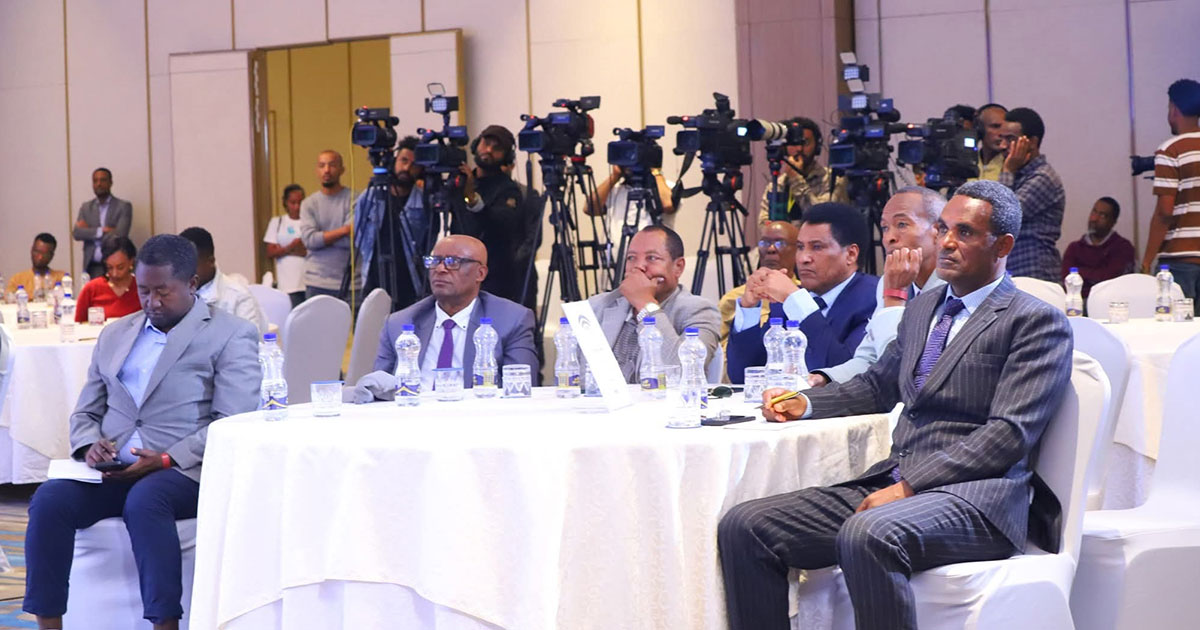
A number of opposition figures who spoke to The Reporter further elaborated the problems facing them and voters across the country.
“We raised several issues during the discussions with NEBE this week. There are serious security threats in Oromia, Amhara, Benishangul, and Southern Ethiopia,” said an opposition leader from the South Ethiopia Regional State who participated in this week’s talks, which were closed to the media.
“Even in areas where opposition parties agree are peaceful, it is very difficult for us due to pressures from the ruling party. In areas where opposition parties seem to have strong support, ruling party leaders are creating pressures. For instance, government officials threaten residents to vote for the ruling party by threatening them with displacement. Officials also force residents to take out voter cards, but then take the cards and keep it themselves. Opposition candidates are being detained or are facing threats. In many cases, members of the ruling party and government officials have been assigned as election facilitators,” he told The Reporter.
The accusations prompted the Election Board to issue a statement this week warning against unconstitutional pressures on voters.
“Nobody has the right to force citizens to register for the vote or threaten to dismiss them from their jobs or cut their salaries unless they do so. Unless these actions stop, the Board will take measures including closing polling stations. Citizens have a constitutional right to vote, but they cannot be forced to,” reads the statement.
Meanwhile, despite the concerns, government officials argue the vote must go ahead as planned to avoid the creation of a power vacuum, which they say will result in a national crisis.
Opposition figures, however, do not agree with this line of reasoning.
“The government is creating an environment where opposition parties cannot thrive, and the ruling party can win without any real contest. Holding an election like this is more dangerous than not having one at all. The government has a responsibility to make elections free, fair, and democratic. Using power vacuums and the national interest as an excuse is just a way to make the vote favorable for the ruling party,” said one opposition leader.
Still, officials say they are making efforts to create favorable conditions for a fair vote. They claim they are willing to engage in talks with the leaders of armed groups in Oromia and Amhara. Last week, Oromia president Shimelis Abdisa said he was “ready to go personally into the bush and speak with the leaders of armed groups.”
Security officers, too, say they are working towards the same goal. A statement issued by Federal Police Commissioner Demelash Gebremichael this week, following a national security conference, outlined some of these efforts.
“All security forces are working to realize the election. The conference also discussed the impact of media on the election, and identified all the positive and negative media [outlets]. We have identified local and foreign media that are working to sabotage the election. This conference concluded there are no security issues that could affect the upcoming vote. In some parts of the country, there are minor issues that need some work. The security task force and intelligence bureaus are working together to eliminate threats. The Ethiopian National Defense Force is leading the operations. We can clear these threats in the time remaining before the vote in June,” said Demelash.
Officials also claim that any outstanding political issues will be resolved through the national dialogue and transitional justice initiatives, which are ongoing despite setbacks.
Just like the last vote, the seventh national election is set to exclude Tigray, where the Tigray Interim Administration (TIA) is still in charge. This week saw the TIA’s term, as well as that of its president, Lt. General Tadesse Werede, extended by an additional year.