





Priced Out of Play—New Fields Leave Young Footballers on the Sidelines
Each morning in the Ayat neighborhood, 13-year-old Abel wakes with a routine that once brought him closer to a dream: becoming a professional footballer. A devoted admirer of Lionel Messi, he used to spend his days training with friends, imagining a future on the world stage.
Now, he watches from the sidelines.
“I live with my mother. She works as a janitor. My father doesn’t live with us. I have two sisters,” Abel said. “We don’t have enough money.”
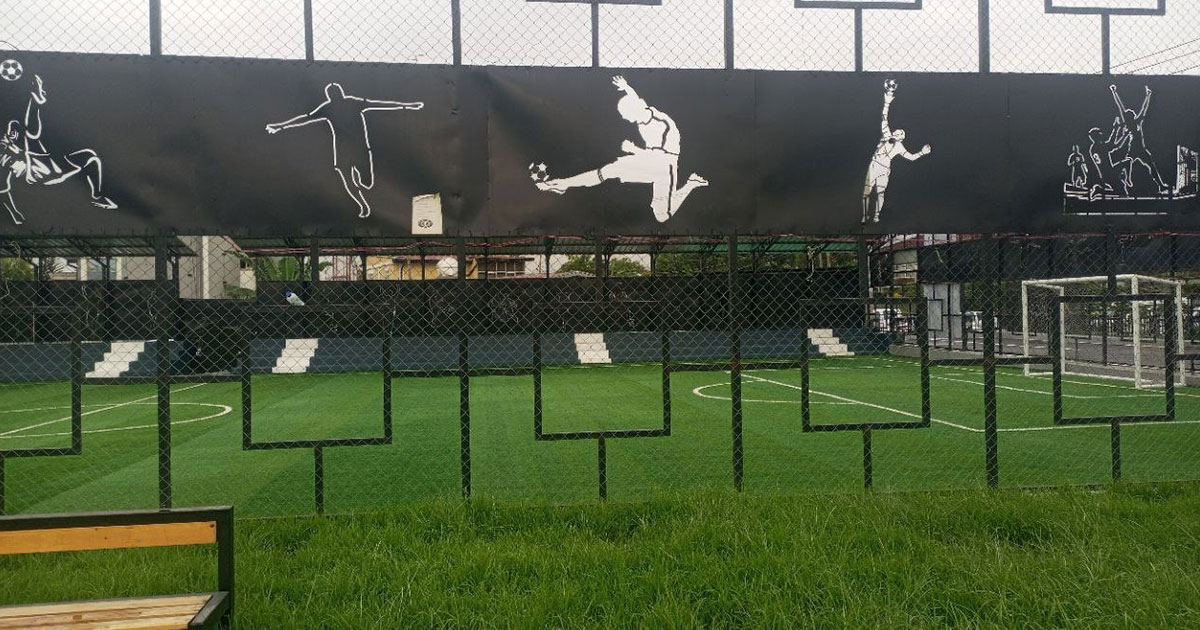
Until recently, Abel trained with a local youth initiative, the Habesha Teenager program. But after the neighborhood field was upgraded with artificial turf, access began to come at a cost.
“They told us to pay to use the field,” he said. “I couldn’t pay. My mother couldn’t pay. Many of my friends also couldn’t. Our coach stopped the training. Now I don’t train. I am worried. How can I become a good football player without training?”
Abel’s experience reflects a broader shift across Addis Ababa, where a surge in newly built and upgraded sports facilities — more than 1,500 in recent years — was intended to expand opportunities for young athletes. Instead, many families and coaches say, access is increasingly tied to the ability to pay.
Hundreds of Young Players, Uncertain Futures
At Belior 15 Meda, a once freely accessible community field, two grassroots coaches — Melese Geber and Elias Ibrahim — have trained hundreds of children at no cost for years. Together, they now oversee about 385 young players.
Both say they are under growing pressure from local authorities to transition to a fee-based model.
“We were told there are two types of projects — government-supported and private,” Melese said. “Private projects must pay to use the field.”
His team, Biruh Tesfa Soccer, has not been included in the government-supported category.
“If they include us, we would accept it,” he said. “But they have not given us any response. Instead, they want us to take money from children who have no ability to pay.”
For Melese, the shift undermines the purpose of the city’s investment in sports infrastructure.
“These fields were built to develop the best athletes who can represent Ethiopia,” he said. “Now poor teenagers are being asked to pay.”
He also pointed to what he described as unequal access. “Some government employees come and play for free for recreation, while the young players — the future of Ethiopian football — are expected to pay. That is not fair.”
Though fees have not yet been enforced at 15 Meda, both coaches said they have been told the policy will take effect soon, leaving them uncertain how to proceed.
Elias Ibrahim, who has led the Raey Be Belior project for more than two decades, framed the issue as both practical and legal.
“We have trained players for the national team and worked for decades without charging,” he said. “We train almost every day to develop future players. These directives discourage us.”
He added that the field’s modernization followed a public pledge to expand access to quality sports facilities, but said the current approach appears to contradict existing regulations.
“The regulation clearly states that youth and those who cannot pay should use the field for free,” he said. “What is happening now has no legal basis.”
A Policy Gap Emerges
At the center of the dispute is a disconnect between policy and practice.
Addis Ababa City’s Sports Facilities Administration Regulation No. 189/2017 guarantees free access for young people and those unable to pay. The regulation does not distinguish between “government” and “private” youth projects.
Yet officials acknowledge that such a classification is now being applied.
“The classification comes from a city cabinet directive,” said Mebratu Regasa, head of the Lemi Kura Sub-City Youth and Sports Center team.
That directive, however, appears to conflict with the standing regulation, raising questions about enforcement and legal consistency.
City officials say the fees are necessary to maintain the upgraded facilities.
“The reason for requiring payment is for field maintenance,” Mebratu said, adding that authorities would investigate any reports of overcharging.
Such concerns have already surfaced. A recreational user at Salayesh Meda reported paying 3,000 birr for one hour of field use — above the official maximum of 2,000 birr, which is supposed to include access to showers and toilets.
A visit to both Salayesh Meda and 15 Meda fields found no such facilities on site.
Officials said complaints should be formally reported for investigation.
Community Frustration
For residents around 15 Meda, the changes have altered a long-standing community space.
“We are from this neighborhood. We grew up here and maintained the field,” said Berhan Hailu, a local sports association leader. “Now even former players who are not part of a project cannot play unless they pay. This is not right.”
City leadership has previously acknowledged similar concerns, with the mayor pledging that youth trainees and people with disabilities would retain free access. How that pledge will be implemented remains unclear.
As Addis Ababa continues to expand its sports infrastructure, the situation at Belior 15 Meda underscores a broader question: whether a system designed to nurture young talent can succeed if access depends on income.
For Abel, the question is more immediate.
Standing outside the field where he once trained, he wonders what comes next — and whether his dream still has a place to grow.