






Earlier this year, a non-profit that administers a voluntary international code for the safe use of cyanide in gold and silver mining certified MIDROC Gold’s Lege Dembi mine as compliant. The certification came following a week-long assessment by a Kenya-based auditor, and also coincided with an independent report spotlighting a worrying health crisis in communities residing near the commercial gold mine.
Controversy surrounding Lege Dembi is not new, as the mine was shuttered in 2018 following public uproar over environmental damage and health impacts. At the time, studies and reports from rights groups indicated the presence of worrying levels of mercury and cyanide near the mine, impacting newborn children, plants, and livestock.
Mining resumed in 2021 despite the concerns, which remain unaddressed. MIDROC claims it paid affected communities a “livelihood restoration” but details on what exactly that entails are unavailable. The company also claims any mercury in the area is residue from the mine’s days under state ownership.
Today, a gold boom in Ethiopia has lured tens of thousands of artisanal miners to an industry that relies on smuggled heavy metals, magnifying worries about toxic waste, environmental degradation, and public health.
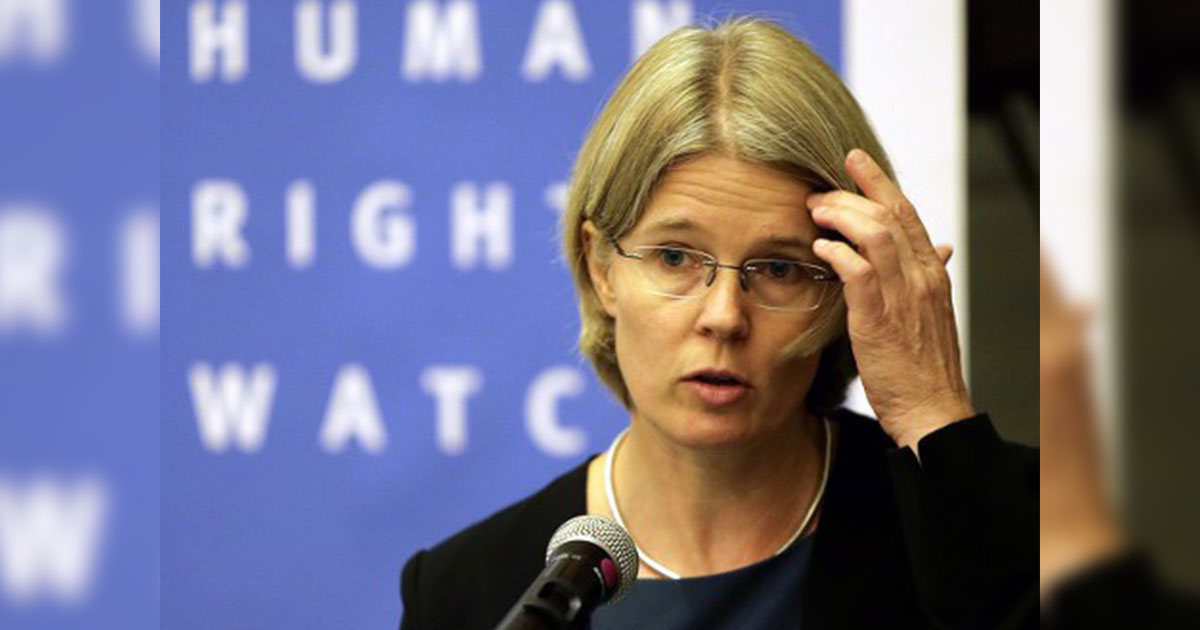
Juliane Kippenberg is associate director in the Children’s Rights Division of Human Rights Watch and an expert on human rights abuses in mining and mineral supply chains. Since 2011, she has conducted investigations and published reports on child labor, children’s environmental health, related subjects in Ghana, Ethiopia, Mali, Tanzania, Zambia, and the Philippines, and advocated for more robust rights protections in mining and in global supply chains.
In an interview with The Reporter’s Ashenafi Endale, Kippenberg shed further light on the concerns surrounding Lege Dembi and the wider Ethiopian gold mining industry. EXCERPTS:
The Reporter: How do you assess the environmental hazard and human rights violation risks associated with mining?
The mining industry is a high-risk sector. There are many human rights and environmental harms taking place, including violations of labor rights, pollution and ill-health, and linkages between mining and armed conflict-related abuses.
In December 2025, an NGO named Kontoma Darimu Alliance and Northwestern University’s Center for International Human Rights (CIHR) published a report on the health crisis facing people living in the vicinity of the Lege Dembi gold mine. It highlighted miscarriages, birth defects, and skin disease, among other worrying problems. What else can you tell our readers?
Residents living near the Lege Dembi mine have complained about serious health impacts for years, including miscarriages, stillbirths, and children born with long-term health conditions. Several studies have also found high concentrations of toxic heavy metals and other chemicals, including cadmium, mercury, lead, and arsenic, near the mine. Now this new report contains fresh testimony from 2025, so several years after the government and MIDROC claim they solved the problems at the mine. The report includes shocking cases of children’s ill-health and deaths, as well as stillbirths. Residents also say they have to drink water from MIDROC’s tailings dams because there is insufficient clean drinking water. One case from the report that stuck with me is of a woman who suffered two stillbirths, and then gave birth to a baby boy who died a few hours after birth.
Reports on the mine’s toxic effects have surfaced repeatedly over the past decade, yet the company continues to refute them. Why do you think decisive action has not been taken?
Some steps have been taken but they don’t seem to have succeeded in protecting people’s health. The reason for this is probably that there is a lack of political will on the part of the government to truly address the problem. Lege Dembi is Ethiopia’s largest gold mine so is an important business for the country’s economy. There has also been little pressure from outside so far.
In 2018, the Ethiopian government closed the mine and promised to reopen it only after environmental concerns had been addressed. It then signed a memorandum of understanding with the global company operating the mine, MIDROC Investment Group, and reopened the mine in 2021. The MoU was never published, so the exact steps taken were not known. MIDROC stated in a 2023 letter to Human Rights Watch that it had paid compensation (called livelihood restoration) to victims, improved cyanide waste management, and provided clean drinking water. In early March 2026, MIDROC denied that there were any human rights impacts resulting from its operations and said the contaminants were in the “allowable range of international standards”. MIDROC also said it constructed a hospital, and that the drinking water provided was sufficient. Yet, the NGO report suggests that the health problems of local residents have continued to occur.
Which hazardous chemicals are responsible for the health problems?
I do not have the answer to that, I am not a chemist or environmental scientist. What we know from chemical and environmental studies is that cyanide, mercury, arsenic, cadmium and lead have been found near the mine. Mercury and cyanide are both widely used to leach gold from the ore—cyanide by MIDROC, and mercury was used by its predecessor pre-1997. When mercury and cyanide are mixed in a certain way, after they are released to the environment, the mixture can cause lethal problems on humans and the environment, so this could be part of the problem.
However, there is no independent evidence which chemical is being used at the site. What it really needs is a full, independent environmental health assessment to recommend steps to protect residents’ right to health and to a healthy environment.
There have been assessments conducted but the findings were never made public. Are you aware of any independent audits?
Lege Dembi mine was never opened up for independent environmental auditing.
However, a number of reports have been conducted, either by firms close to MIDROC, or government institutions. So, these are not impartial reports. Yet, even those studies contain alarming evidence regarding the use of hazardous chemicals at the site, and the health risks connected to these chemicals.
The UN Committee on the Rights of the Child inquired about the mine and those affected during a recent meeting, and an Ethiopian delegation replied by stating that affected communities had been compensated. Was compensation paid out?
We understand from MIDROC that payments were made to the affected communities. MIDROC does not call this compensation, but livelihood restoration. However, there is no public report on this process, disclosing for example how victims were identified, on what basis the compensation was given, whether it was cash disbursement or other remedy, or when it was done.
Less than two months ago, the International Cyanide Management Institute (ICMI) certified MIDROC’s safe use of the chemical. Was this certification based on an independent assessment?
Yes, the certification under the ICMI states it is based on an audit by an independent, third-party auditor. We cannot judge whether this was a legitimate and transparent process.
Have you pressured MIDROC or the Ministry of Mines on issues related to the affected communities, or requested an independent audit of the site?
In our 2023 report, we called upon the government, MIDROC and the company to conduct a comprehensive, inclusive, and transparent process of remediation at the mine, guided by international environmental and health experts. We also urged the government, together with international environmental and health experts, to put in place a robust monitoring program, subject to independent audits, that will monitor and publish contaminant levels over time, taking corrective action when contaminant levels exceed thresholds. We have also reached out to the government and MIDROC directly.
Who can force commercial miners to open their doors to an independent environmental audit?
Ideally the UN and also World Bank can exert pressure to make sure the Ethiopian government and the company open up the mine for independent environmental health assessment, and also make sure the mine adheres to international laws and standards of chemical uses during mining.
MIDROC acquired the mine from the government in the mid-90s. The company has previously claimed that mercury was used while the mine was under state ownership, and said it has only ever utilized cyanide. Do you think this is true?
From what we know this is true. Before MIDROC bought Lege Dembi from the government, the government was using mercury in the mine. MIDROC claims it stopped using mercury and shifted to using cyanide. But this should be confirmed by independent auditors. Even if MIDROC is not using mercury anymore, there is a problem with mercury—mercury stays in the environment for a long time. That means even the mercury the previous company used is still in the soil, water bodies, and the environment.
International conventions prohibit trade in minerals sourced from conflict zones, and there are laws in place against labor abuse and environmental degradation in the industry. However, gold mined in Lege Dembi is readily received by the global market. Do you think large mining firms can truly be held accountable?
Until the closure of Lege Dembi in 2018, MIDROC sold the gold to a gold refinery in Switzerland. However, after MIDROC reopened the Lege Dembi in 2021, the gold was not being supplied to Switzerland anymore. We have written to the UAE, another major destination for gold, to ask them to check if gold from Lege Dembi is being sold there, but the government did not answer. We do not know where they are sending the gold now.
Actors in global supply chains—such as traders, gold refineries, and jewelry brands, as well as industry bodies such as the LBMA—can do more to ensure they are not contributing to abuses. We have been pushing for more responsible conduct, and for mandatory rules on due diligence, in gold supply chains for years.
Reports suggest that substantial volumes of hazardous chemicals like mercury and cyanide are circulating and in use in Ethiopia at present, including by local artisanal miners and foreign mining outfits. How are these chemicals making their way into the country? Why is the government unable to trace and identify suppliers and distributors?
Basically, Importing mercury legally is prohibited under the Minamata Convention on Mercury, a global treaty designed to protect human health and the environment from anthropogenic emissions and releases of mercury and mercury compounds. It specifically bans, restricts, or regulates the import of mercury from primary mining and other unauthorized sources.
Therefore, the mercury being circulated in Ethiopia is most likely illegally smuggled.
How many people do you think are affected by the abuse of hazardous chemicals in the mining industry?
An estimated 50 million people are working in gold mining globally, most of them in artisanal and small-scale mining. Therefore, the risk and exposure to hazardous chemicals is significant.