





With less than four months to go before the seventh national election, more than 40 political parties have endorsed a new Code of Conduct for Candidates approved by the National Election Board of Ethiopia (NEBE).
On paper, the document promises a peaceful, lawful and disciplined campaign season.
On the ground, opposition leaders warn that Ethiopia is facing “a full-fledged war,” a suffocating political space, economic strain, and an enforcement system that risks becoming “a lion without teeth.”
Across parties, opposition leaders offered The Reporter sharply different readings of the country’s readiness for the polls. But they were united on one point: that the real test will not be the words in the code of conduct, but whether anyone dares to enforce them.
For Mistresilasie Tamerat, secretary of the Ethiopian People’s Revolutionary Party (EPRP), the starting point is clear.
“Regarding peace and security, our party does not believe that what exists is merely a security problem. Rather, our party believes that there is a full-fledged war,” she told The Reporter.
Mistreselasie underlined the conflict in Amhara, the recent war in Tigray, nearly eight years of unrest and insecurity in Oromia, and heightened tensions and sporadic violence in places like Benishangul-Gumuz.
“Peace is indispensable not only for elections but for any daily activity. Peace is the foundation of everything,” she said, arguing that without peace, the conversation about elections is almost theoretical.
“Whether we talk about the economy, tourism, elections, or any other matter, nothing can function outside the framework of peace,” she said. “As we have repeatedly stated, we do not believe that conditions are conducive for conducting elections in Ethiopia. This is not only in relation to peace or the issues I mentioned earlier, but also because the political space has become extremely narrow—almost to the level of danger.”
EPRP is part of the “Cooperation for Ethiopian Unity,” a coalition that includes the All Ethiopian Unity Party, the Enat Party, the Ethiopian Democratic Party, and the Agin Party.
But even within a coalition preparing for electoral competition, Mistresilasie observes the political space is far from uninhibited.
“It’s not just about political prisoners,” she said. “As a party, we too, along with other genuine opposition parties such as those in our coalition, are facing significant pressure, intimidation, threats, and arrests.”
When asked how she assesses the rising cost of living, particularly in an election year Mistresilasie linked the economic situation directly to peace and security.
“As I said earlier, whenever we raise the issue of the economy, indeed any sector, it ultimately ties back to peace,” she said. “In our view, unless the issue of peace is resolved, or unless people are able to live in peace, economic stability cannot be achieved.”
She argued that no economic ideology can succeed in a context of sustained conflict.
“Whatever policy alternative one proposes, this is the reality. For example, a party that claims to follow social democracy cannot promise economic growth and justice while pursuing a path that perpetuates war in the country. That would be a false promise,” said Mistresilasie.
She underlines that peace and security must be addressed before economic recovery or price stabilization can take place.
“So regardless of ideology, for any economic policy to bring growth and improve the people’s living conditions, the issue of peace and security must first be addressed as the primary prerequisite. To stabilize the cost of living, peace is needed first,” said Mistresilasie.
Beyond security, she raised concerns about what she described as externally influenced economic reforms threatening the country’s sovereignty.
“In particular, what members of the Prosperity Party refer to as ‘economic reforms,’ which we know are influenced by the IMF and the World Bank, are measures that have been lowering Ethiopians’ living standards day by day,” said the EPRP Secretary.
She pointed to currency depreciation and inflation as key drivers of rising costs.
“As the public knows, whenever the purchasing power of our currency, the Birr, is repeatedly reduced, inflation increases. This is a basic economic principle. One does not need to be an economist to understand this.”
She linked this to economic sovereignty.
“If a country fails to defend its economic sovereignty, economic stability cannot be expected—and it will not come,” said Mistresilasie. “As a social democratic party, we believe there must be fair wealth distribution. Basic necessities should be accessible to the public at reasonable prices, and some essential services should even be provided free of charge to all citizens without discrimination.”
However, she returned to her central argument arguing that to achieve this, “the country’s economic sovereignty must first be protected; peace and security must be ensured; and wars must be stopped.”
Alongside peace and security issues and economic uncertainties, analysts and experts raise questions about the feasibility of political coalitions. They ask whether long-established or emerging cooperation is tactical, and whether it can truly be effective in winning elections and forming a government.
In Ethiopia’s electoral and government history, coalitions have come and gone. The 2005 Coalition for Unity and Democracy remains the benchmark of many references.
This time, EPRP insists its alliance is not seasonal.
“When we formed the Cooperation for Ethiopian Unity, it was not just for today or solely for the purpose of elections,” Mistresilasie said. “For the past four years, we have assessed what conditions enable us to work together and what our shared stance is on national issues.”
She rejects the idea that coalitions are simply arithmetic exercises.
“Political organizations are composed of people. If the individuals within them are not harmonized or coordinated, it becomes difficult for parties to work together,” said Mistresilasie.
She argues that coalitions test ideological compatibility, leadership integration, and national outlook before formalizing.
“It was not formed simply to win an election,” she said. “If we enter the election fully, we are confident we will win. And when we do so, we will not remain merely as a coalition; we will move toward deeper integration.”
Her criticism extends to past parliamentary outcomes.
“What undermines the credibility of the House of People’s Representatives is when the ruling party claims to have won almost ninety-nine percent or one hundred percent of the seats, especially when it is widely known that this was not the case,” she said. “Claims of ninety-nine or one hundred percent victories through improper processes damage the credibility of parliament.”
Her focus, she says, is not symbolic opposition.
“We are working not merely to occupy a few parliamentary seats, but to form a government,” she told The Reporter.
Other political parties have a more positive view of the new code of conduct and overall preparations for the vote.
Rahel Bafe (PhD), chair of the Ethiopian Social Democratic Party (ESDP), was among the political figures who took part in a one-day consultative discussion with election officials about the code before it was approved on Monday.
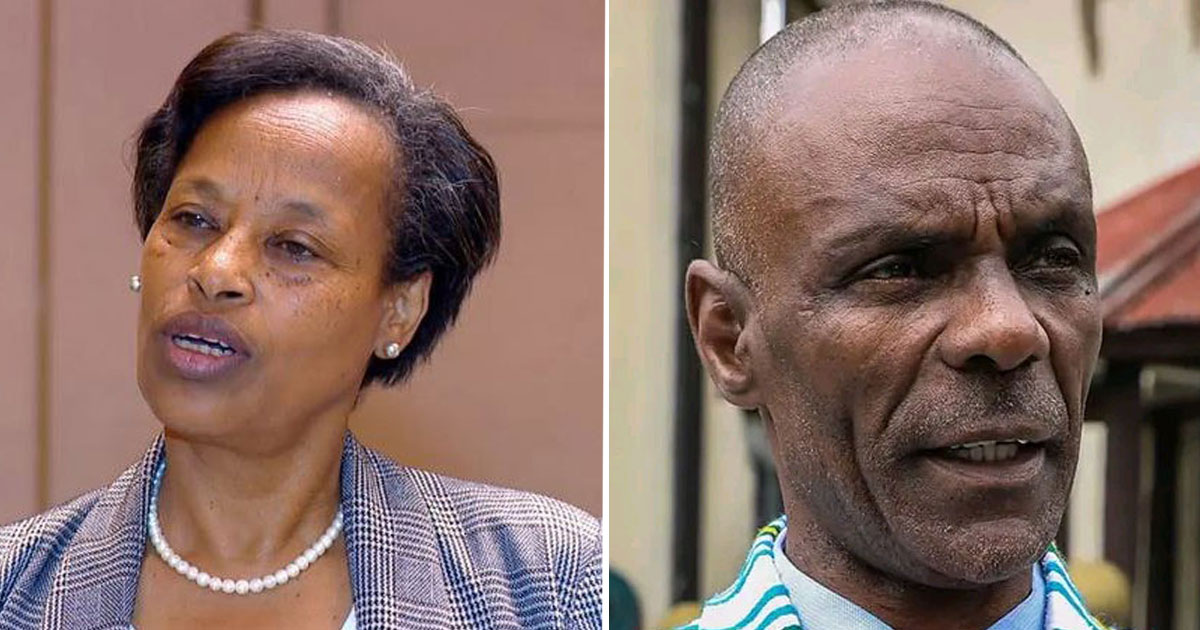
She told The Reporter she was satisfied with the code, and impressed with the consultative process.
“Our discussion was not symbolic,” said Rahel. “Often, discussions tend to be symbolic—ideas are not incorporated, and meetings are held merely for the camera while decisions have already been finalized behind the curtains ahead of the discussions. What I observed this time was different.”
Describing the discussions as “genuine,” she conceded that not everything was on the table, and cautioned that the real challenge lies in what comes next.
“Our main challenge as a country, however, is not discussion itself. The issues we discuss often do not reach the ground. We struggle with implementation,” said Rahel. “If we can properly implement what has been agreed upon, despite its shortcomings, it would be a good beginning.”
Pressed on what NEBE must do, Rahel did not soften her words.
“The Election Board must work diligently. It must also be independent from the government. It is not independent; certainly not,” she said, noting that enforcement mechanisms still rely almost entirely on government structures whose imprartiality is cause for doubt.
“As we move down to the constituency levels, the agreements reached are often not implemented. The Board is unable to operate freely or enforce decisions,” Rahel told The Reporter.
She pointed to the justice system as an example of ruling-party influence.
“Many appointees are either members or supporters of the Prosperity Party. Therefore, it cannot truly be independent. That influence exists,” said Rahel.
Still, she frames responsibility collectively. “As citizens, as competing political parties, and as a Board, we must all shoulder responsibility and assign the lion’s share of accountability to the government.”
ESDP says it has registered more than 470 candidates in hard copy. But she notes problems already emerging: “Among those registered online, none has yet received confirmation messages.”
The party will not field candidates in the Amhara, Tigray, Afar, or Gambella regional states, according to its Chairperson.
“In Tigray, the party does not have members. In the Amhara region, its offices have been closed,” Rahel told The Reporter.
Other political figures, like Abdulqadir Adem (PhD), chair of the Freedom and Equality Party, also acknowledge the instability in the country, and argue that conducting elections under the current circumstances is akin to “choosing the lesser evil.”
He told The Reporter that his party is participating in the vote with the understanding that problems may arise during candidate selection, campaigning, or “even in ensuring that voting is truly free.”
“There are many challenges—many problems,” said Abdulqadir. “At the same time, if an election is not conducted in a country, it creates a situation where there is no government with acceptable legal legitimacy. That, in turn, creates a vacuum.”
He raised concerns about the ruling party’s reach, and warned against misuse of power.
“The ruling party has vast capacity—it can reach everywhere. It administers the government at woreda and zonal levels. It has financial resources. It can manipulate processes,” said Abdulqadir.
He fears citizens could be pressured “through money or intimidation, like being told they could lose their jobs or be removed from safety net programs.”
Abdulqadir says his party sees participation as a duty, and called for voter rights to be respected.
“No government should remain in power for more than five years under any circumstances. Even if the situation is not perfect now, the culture must be preserved,” he said. “Among many evils, we are choosing what we see as the lesser evil.”
He described the new code of conduct as “a positive step,” and echoes others in his call for adequate enforcement.
“Yes, as a country we are very good at drafting laws. We do not have a problem with producing legislation,” said Abdulqadir. “But if a law remains on the shelf, it has no meaning. It becomes like a lion without teeth.”
Genene Gedebu of the Kucha People’s Democratic Party describes the Code as “acceptable to all political parties.”
“If it is implemented properly on the ground, it is very good overall,” he said, also circling back to enforcement. “The main issue that requires much needed attention is whether it will actually be implemented. We will judge it based on how it is implemented—whether the Board clearly takes action against violators and corrects wrongdoing.”
From war zones to rising living costs, from coalition engineering to institutional independence, the opposition figures who spoke to The Reporter reveal a political class bracing for a difficult season.
Across party lines, the code of conduct is seen as necessary, but doubts over enforcement and impartiality hang heavy. The question now is no longer whether a code has been signed. It is whether Ethiopia’s institutions have the will and the teeth to enforce it convincingly.