






Ethiopian officials have called on Italian businesses operating in the country to expand into deeper, long-term collaboration from familiar roles in trade and product supply.

The call came during the inaugural edition of the Ethio–Italy Business Forum on Construction, Infrastructure and Urban Engineering this week in Addis Ababa, which saw the attendance of the Italian deputy foreign minister and several senior Ethiopian government officials.
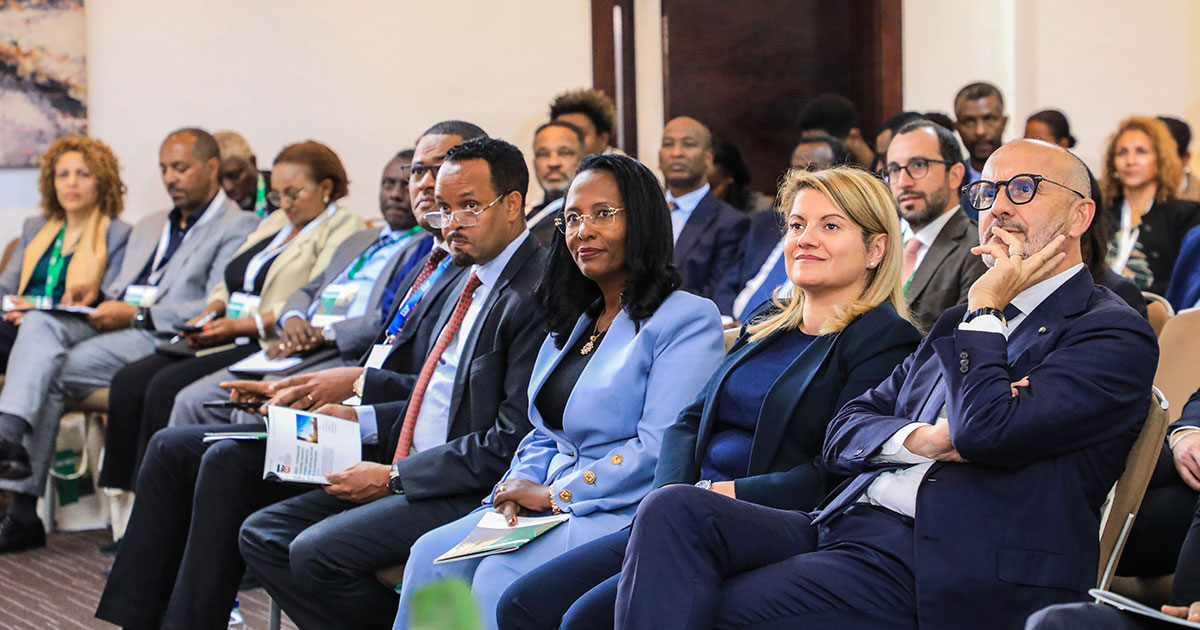
During the forum, State Minister for Urban and Infrastructure Development Yetemgeta Asrat urged Italian companies to go beyond product supply and embrace partnerships.
“We seek technology and skill transfer to link Ethiopian entrepreneurs and SMEs with Italy’s best industries,” he said, underlining Ethiopia’s openness to “innovative financing and public–private partnerships in different infrastructure projects.”
Yetemgeta highlighted Ethiopia’s urgent need for expertise in high-capacity corridors, expressways, airport expansion, and mass housing projects, citing a two-billion-dollar infrastructure financing gap.
Italian Deputy Minister for Foreign Affairs Maria Tripodi expressed her country’s support for Ethiopia’s reforms: “We look with great favour upon the courageous path of structural reforms and the progress made in strengthening the banking system, as well as the gradual approach to WTO accession.”
“Collaborating with Italy means choosing a technological partner that transforms major works into lasting symbols of progress. We want to be your technological allies in supporting the goal of universal energy access by 2030 and are ready to strengthen financial architecture and interbank relations as the ideal foundation for multiplying business between our countries.”
Claudio Pasqualucci, director of the Italian Trade Agency (ITA) office in Ethiopia, told The Reporter that the forum was organized to promote opportunities for both private and public sectors and to explore how Italy can cooperate in Ethiopia’s infrastructure development.
He noted that while total bilateral trade remains below 300 million euros, Italian manufacturers are showing growing interest in Ethiopian teff and coffee for healthier food products such as pasta, bread, and biscuits.
Pasqualucci stated that Italy plans to support the digitalisation of public administration and will establish a marble production training centre in Assosa University this year, bringing Italian machinery and professors. Claudio acknowledged challenges, including financial communication between Ethiopian and Italian banks and issues of collateral and guarantees for private‑sector financing.