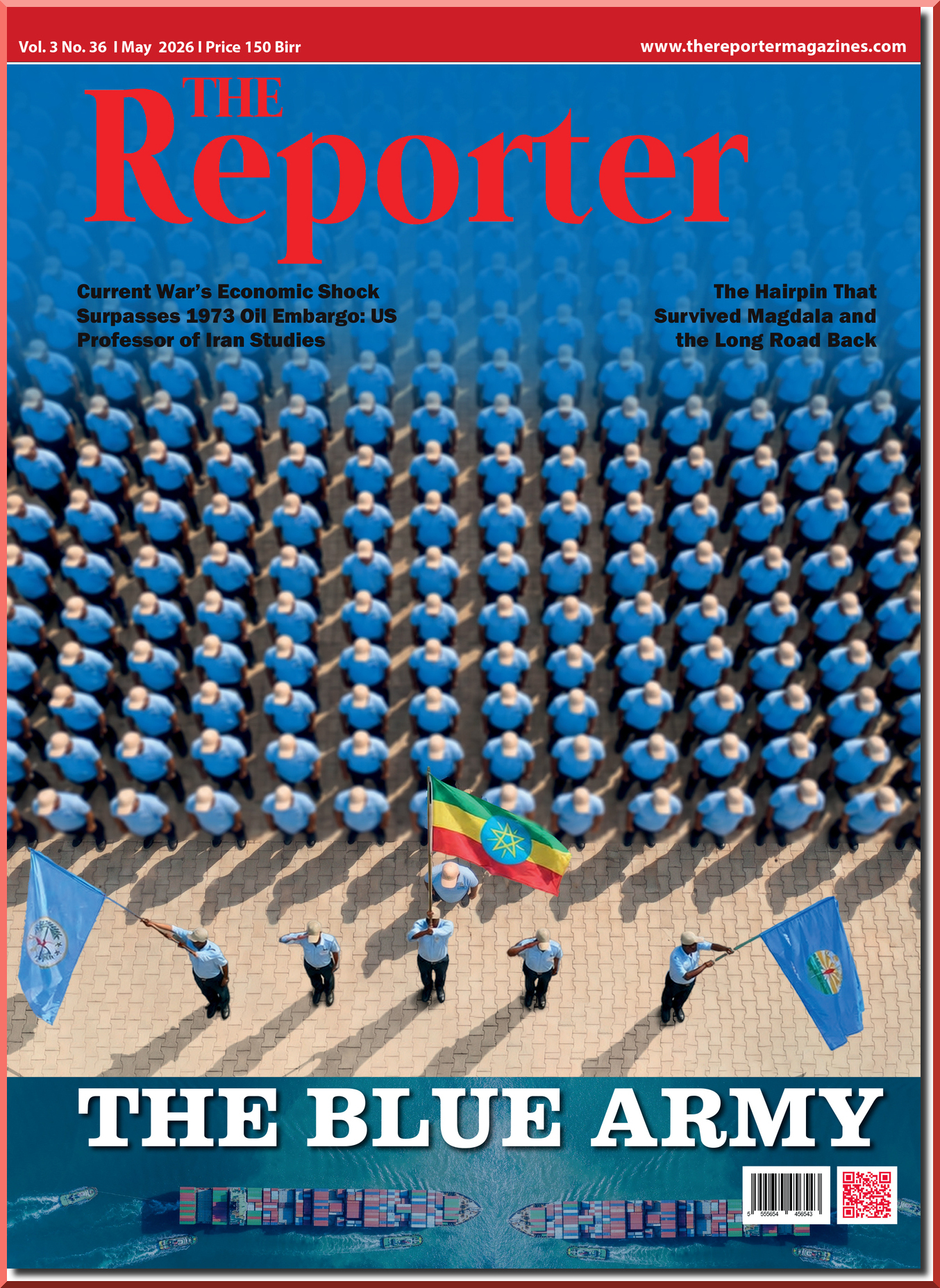






A report by a center-right think tank based in Washington, DC warns that Ethiopia’s pursuit of sovereign sea access is fundamentally altering the geopolitical landscape of the Horn of Africa.
The report from the American Enterprise Institute, titled “Fault Lines in the Horn of Africa,” identifies Ethiopia as a central “middle-power” player whose maritime ambitions have triggered a regional security crisis and a “battle for Red Sea influence” involving the Gulf States, Turkey, and Israel.
The report details how the Ethiopian government increasingly views its landlocked status as a strategic vulnerability that must be rectified.
“Abiy [Ahmed] has framed sea access as an existential issue and a natural right for Ethiopia, referring to the country’s landlocked status as a ‘geographic prison,” reads the report quoting the Prime Minister’s firm stance.
The issue of sea access and regional security has taken center stage in recent weeks, with Addis Ababa hosting the presidents of both Turkiye and Israel.
Addressing the media during Recep Tayyip Erdoğan’s visit, the PM described Ethiopia as a “geographic prisoner,” arguing that a nation of over 130 million people cannot sustain its growth while being denied access to the sea. He also characterized Ethiopia’s landlocked status as “historically unjust” and contrary to prevailing global practices and contemporary economic trends.
While acknowledging Ethiopia’s development ambition as “just” Erdoğan warned that “the Horn of Africa should not be turned into a battleground for foreign powers,” citing the external geopolitical competition that seeks to inflame regional divisions.
He urged that conflicts be resolved through regional cooperation and dialogue rather than military escalation or foreign interference.
The AEI report further reads that Ethiopia is moving beyond rhetoric by actively rebuilding its naval capabilities.
After dissolving its original navy in the 1990s, the country re-established the branch in 2018 and has since secured training and technical agreements with France and Russia, according to the report.
It added that the ambition reached a boiling point following a controversial memorandum of understanding (MoU)with Somaliland, which promised Ethiopia a 50-year lease on a naval base in exchange for potential diplomatic recognition.
However, the AEI report notes that the move has “fractured” regional alliances.
In response, a “status quo” axis comprising Egypt, Saudi Arabia, and Eritrea has emerged to contain Ethiopia’s expansion, reads the report. According to the report, Egypt, in particular, views Ethiopia’s maritime rise—coupled with the Grand Ethiopian Renaissance Dam (GERD)—as a direct threat to its historical dominance over the Nile and the Red Sea.
The report concludes that these tensions are compounded by domestic instability and warns that the Horn of Africa now faces a heightened risk of interstate conflict, with international powers like the UAE and Turkey backing opposing sides in a standoff over one of the world’s most vital maritime corridors.
In an opinion piece published in The Reporter, Muauz Gidey (PhD) of the Tigray Institute for Policy Studies argued that the federal government’s ambition for “both-and” economic sovereignty through maritime access has forced Eritrea into an “either-or” defensive posture, where it views the TPLF as a necessary, albeit temporary, proxy to destabilize the Ethiopian highlands.
According to Muauz, this creates a paradoxical endgame.
“Eritrea is currently protecting the very TPLF leadership it once sought to eliminate, solely to ensure that Addis Ababa remains too internally fragmented to project power toward the coast,” it reads, adding that the United States and the UAE are applying a transactional logic, offering to mediate only if Ethiopia accepts an “either-or” limitation on its Nile sovereignty and Red Sea ambitions.
In his article, Muauz stated that each international pressure creates a “Möbius strip of causality, where the local actors perform “Either-Or” military maneuvers to attract “Both-And” international support.”