





Inside AAU’s “Angafa” night, where music, poetry and chance converge
By 11 p.m., the hall at the Addis Ababa University Cultural Center was already alive — not with noise alone, but with a mounting, almost tactile anticipation. Students filled the seats; others stood shoulder to shoulder along the walls. Invited guests and curious onlookers pressed inward, forming a dense, electric crowd. The 52nd edition of the weekly “Angafa” art show was minutes from starting.
Scheduled for 11:30, the evening veered off script before it began. The lights went out. For a moment, there was silence. Then illumination returned — not from above, but from within the audience. Dozens of mobile phone flashlights flickered on, casting a soft, collective glow across faces, hands and a stage that refused to disappear.
Out of that light, a voice emerged. Yohannes Alemayehu, a singer from Orchestra Ethiopia Band, began “Hulemenash Mulu,” the Tewodros Tadesse classic music. The audience joined almost instantly, their voices swelling into a chorus that filled the hall. “It didn’t even feel like there was a blackout,” one attendee said. Moments later, the power returned.
What might have been a disruption became something closer to authorship. The audience had not merely endured the interruption; it had absorbed it, reshaping the moment into part of the performance itself. When the lights came back, the program resumed with sharpened energy.
The Fishers Second Band opened with a vibrant set, followed by the young vocalist Anteneh Tesfaye, who performed Tilahun Gessesse’s “Ena Bebekule,” drawing a strong, immediate response.
Then the evening shifted into poetry. Yabsera Tameru took the stage, reading from his poetry book, Love Hope. At the end, he stepped toward the guest artist Dibekulu Tafese and handed him a copy — a quiet, symbolic gesture that suggested continuity between emerging and established voices.
Sirak Wendemu followed, reading from his third book, Somsoma. His delivery drew the hall into near-total stillness before applause broke through. The mood shifted again when Dibekulu purchased both books onstage — each priced at 5,000 birr — transforming appreciation into tangible support.
For many in the room, Dibekulu is more than a guest performer; he is a defining figure in contemporary Ethiopian music. Raised in Addis Ababa, he gained prominence as the lead vocalist of Jano Band, whose fusion of Ethiopian musical traditions with rock elements helped reshape the soundscape of a younger generation. Their album Ertale, featuring tracks like “Ayrak,” marked a turning point. After years of touring across Europe and the United States, he embarked on a solo career around 2020, seeking greater artistic latitude.
Back onstage, that range was visible. A performance by the Ethio Yaredawiyan Dance Group evolved into a shared moment, as Dibekulu joined the dancers, dissolving the boundary between featured artist and participant.
A fashion segment followed under the theme “Tikur Engedaye Meshet,” with the Addis Ababa University Cultural Center modeling group turning the stage into a runway, walking to Dibekulu’s “Tikur Engedaye.”
Music returned in succession. Mekdes Webeshet performed Netsanet Melese’s “Yetale Lij Yetal,” followed by Dagmawi Negus, who energized the room with Girma Beyene’s “Enken Yelalebesh,” combining voice and movement in a kinetic set. Singer Berihun Gizaw closed the sequence with Melkamu Tebeje’s “Ye Leben Adarash,” drawing sustained, emotional applause.
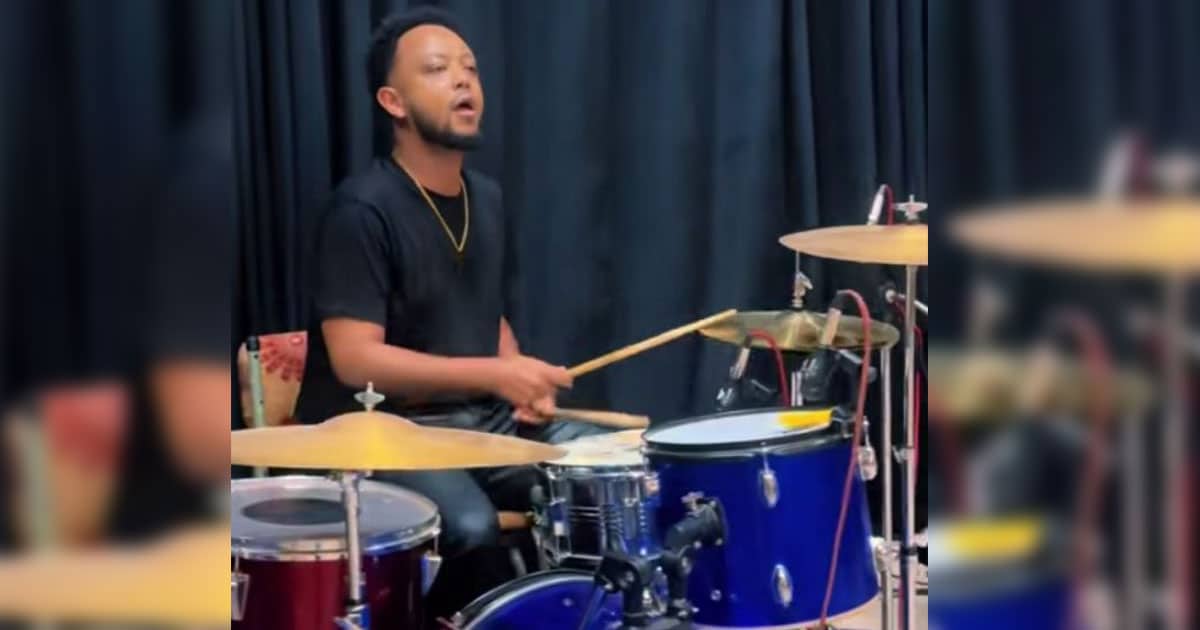
Dibekulu returned to the spotlight for a quieter turn: an onstage conversation tracing his artistic evolution, from band frontman to solo performer. The tone shifted again when, mid-discussion, he began a restrained, deeply felt rendition of Alemayehu Eshete’s “Wededku Afekerkush.” The hall fell still. Moments later, he pivoted, picking up the drums and launching into his own “Ayrak,” reintroducing rhythm and momentum.
By the time he moved through “Ayrak” and “Tikur Engedaye,” the audience was fully absorbed — singing, clapping and moving in near unison.
“I am so happy to be here,” Dibekulu said. “The students’ energy is incredible — it feels like a concert. This reminds me of the Jano vibe. The poets, singers and dancers — all the young performers — are amazing.”
Performers, too, framed the evening as both milestone and beginning. Speaking afterward, Yohannes described the moment as formative. “At this stage, I introduce myself as an emerging artist,” he said. “It is a great pleasure to perform for this audience. I feel optimistic about the future. I will come with my own music.”
Dagmawi Negus, known as Dagi Jing, emphasized the personal significance of sharing the stage with Dibekulu. “Performing with him was a dream,” he said. “I started performing three years ago on this same stage. I want to thank my parents, my family and especially my bandmates, the Fishers Second Band — they supported me throughout tonight.” He added that while he primarily performs diatonic Amharic songs, he intends to experiment with new styles in the future.
Behind the performances lies a deliberate structure.
Naod Degf, a third-year theater arts student and a representative of the cultural center, described a program designed for continuity as much as showcase. “We organize this art show every Wednesday,” he said. “There are also film screenings on Tuesday nights, along with literary events and book reviews. It’s open to everyone — free of charge.”
For those in attendance, the experience extended beyond performance. Bilen Kuru, attending for the first time, described the event as both inspiration and entry point. “I’m very excited to be here,” she said. “I love Dibekulu’s music, and I enjoyed the event a lot. I’m also trying to sing — this inspires me.”
Abel Mekuria, a regular, framed it more simply. “Whenever I feel stressed, I come here,” he said. “Art relaxes you. It helps you look into yourself.”
As the evening drew to a close, the Addis Ababa University Cultural Center’s director, Assistant Professor Tesfaye Eshetu, presented Dibekulu with a certificate of appreciation. The artist Seleshi Mola followed with a hand-painted work — a final exchange in a night defined by reciprocity.
The lights, by then, were steady. But what lingered was something less tangible: the “Angafa” art show offered a clear, if familiar, proposition—art does not wait for ideal conditions. It generates its own.